Lost Past; A Star Trek Story

Paramount Global owns the Star Trek franchise. This is a piece of fan fiction based on Star Trek the Next Generation.

May I?

“You have done a marvelous job recreating the meadow of Omicron Theta.” Sher’s voice brought Data’s thoughts back to the Enterprise.

“Thank you.”

She sat down beside of him. “Are you going to tell me why you are upset with me ?”

“Are you still cold?”

“Not as much.”

He presented her with a wrap. “Thank you,” he wrapped it around her shoulders.

“Three things are bothering me now.”

“Three? You mean it was less?”

“Yes. It was just two.”

“Okay, let’s hear them.”

“First, what was Q doing here the other day?”

“Jealous?”

“What if I am?”

“I think a little jealousy is healthy.” She smiled. “Q and I have been friends for a very long time. If I ever had a soul mate, it would be him. We have always and only been friends.”

“You have never had a physical relationship?”

“Never. Our peoples are cautious of each other. Q and I have been friends since the day we met. We have had to sneak around to be friends. But we have maintained our friendship non the less.”

Data looked at her for a long moment. “You have called me Prince on several

occasions, have you and I ever been married?”

“No, we have not. You are the closest I have ever come to being married. You are the only person that truly knows me.”

“Why did we never marry?”

“You never asked me.” Came her direct reply. She hugged herself up.

“This one has been the one question that has really been bothering me.” He sighed, “We had an encounter with the Sheno during our journey to find you.”

“The Sheno,” she thought out loud, “that was the civilization the man who attacked me belonged to.”

“Yes, I befriended the Captain that we met. He was a very nice man. He gave me a copy of the Shend’s history, covering the last 100 years.”

“What does that have to do with me?”

“I remember you getting hurt. I remember the manner in which your father killed the Sheno. Every detail confirmed that I was not going insane. At the time, I needed that confirmation. I had no idea what was happening to me.”

“That was a good thing then, so what is bothering you?”

“I cannot believe you did not tell me. Did you not think I would find out? Did you think that you could keep a secret like that from me forever? Why? Sher, why?” He got up, walking to the edge of the pond.

“Why what?” She remained seated. The longer she sat there the colder she became.

“Do not play with me? I can not take it.”

“DaTa, if I knew what you was talking about, I might be able to assist you.” He turned to face her. Her expression was so gentle. He could see that she was cold. He wanted to rush over to her, put his arms around her, and heat her up. He reframed. The pain he felt was too much to dismiss again. “You cannot sit there and tell me with that angelic face that you do not know what,” he stopped in mid-sentence. “You do not know what I am talking about do you?”

“That is what I have been trying to tell you.”

He hung his head. “I feel like such a fool. How could I not trust you?” 

She walked over to him, reaching out with her soft touch and caressed his face. “What?”

“According to the Sheno’s history, you were pregnant.”

“I have never been pregnant.”

“Could you have been pregnant and not known about it?”

“It is possible, the normal gestation cycle for a female Turritopsian is 12 months. 90% of Turritopsian women do not know they are pregnant for 5 months into the birth process. DaTa, I didn’t think you could father a child?”

“Nor did I. We both know that when we are together, I experience things that are not normal.”

“I have raised children. I have been a mother figure but I have never been pregnant with my own.” She was in shock. “Wow.” She paused, “before I get upset, may I read the book?”

“You may.” They went back to Data’s quarters. He offered her the book. She sat down and began to read. “I must go. Duty calls.”

“I shall be somewhere.”

He knelt by her chair, “forgive me?”

She leaned over and kissed his forehead. “Of course my dearest.”

Lost Past; A Star Trek Story

Paramount Global owns the Star Trek franchise. This is a piece of fan fiction based on Star Trek the Next Generation.

Where have we been?

Picard was walking through Engineering. Data was going over the last 12 hours of star charts. “Anything new?” Picard asked.

“Everything, this is all new space to us.”

“How are you doing?”

Data took his tablet as they began to walk out of Engineering. “I am confused. I have so many emotions boiling inside of me that I am finding it difficult to focus on one.”

“I can’t imagine how you feel.”

“Is it normal to take your feelings out on someone that does not deserve that

treatment?”

“Yes, we tend to hurt the ones we love. Where are you headed?”

“Stellarcartography, I can not trace where we are going. I can trace where we have been.”

“What type of pattern are we traveling?”

“It is chaotic almost to the point of having order.”

“Out of chaos comes order.”

“Friedrich Nietzsche,” came Data’s reply. He loaded the new information into the stellacartography database. Images of space appeared on the walls, “the blue line is our journey through Cardassian space.”

“What do the markers mean?”

“They are the ships that we encountered.”

“I see.”

“The yellow line represents space we know nothing about.” The yellow line looped around planets then cut across open space. It has no direct path from point A to point B. Data looked up at Picard, “Chaos. If there is method in the madness, we are unaware of it.”

“If someone would not spend all their energy being angry with me, he might get some information out of one that knows.” Data and Jean-Luc turned around to find Sher standing three feet behind Data.

Picard didn’t know if it was his eyes playing tricks on him or if she really was glowing. She was an angel. He couldn’t understand why Data was upset with her.

“I am not angry at you.”

“Yes you are.” Data started to get up. “That is okay. You need to type.” She smiled.

“How are you feeling?” Picard asked.

“I can’t seem to shake the chills.” She smiled, looking at the stars in front of them, “The reason we made a loop around Crima, it is an outpost. We made the loop so that the beacon could pick up the Enterprises presence.”

“Sensors did not pick up any type of energy.”

“They wouldn’t. Your sensors tend to overlook the faint. To make an analogy, a flea could destroy the Enterprise because she is looking for a spider.”

“We’ll correct that oversight.”

“You would learn a lot more if you would.”

Picard interrupted, “why the chaos in the line patterns?”

“Four inches from Crima zig to the left.” Data highlighted the zig for her. “A sun went supernova three years ago. A slight magnetic disturbance still exists. The S pattern,” Data highlighted the area she was talking about. “There is a temporal disturbance in that area. It is easier to go through it than it is to go around it. The U pattern toward the top, “again Data highlighted the area she was referring to. “That is a worm hole.”

“There was method to the madness,” Picard smiled.

“If you get to spend any amount of time around my people good Captain, you will learn we never do anything without a reason.” She looked at Data who was still working on the map. “Like the little display on the bridge.”

“I was not going to say anything.”

“You don’t have to.”

“Thank you for that.” Picard interjected. “I know I was hostile towards you.”

“That is quiet alright. Please inform your Lieutenant about that philanthropic

deed.”

Data spun around, jumping out of his chair, “I don’t….” He paused.

“You just said a contraction.” Picard smiled.

“How?”

“Perhaps it required a level of emotion Soong thought you would never achieve? And all because you are mad at me.” She smiled, leaving the room.

“Why are you angry at her?” Picard asked.

“I do not know.” Data went after her. “Stop, please.” She stopped, turning around to face him. “May we talk?”

“We may.”

“Please meet me at Holodeck 3 in 4 hours. I am off duty.” 

She gave a slight bow. “As you wish, my Prince.”

Thankful Thursday

Recently, I listened to Stop Letting Everything Affect You by Daniel Chidiac. At the end of the book Mr. Chidiac encourages his listeners to be “thankful for you”. Undercover Publishing House 2025

I grew up in a household where you DID NOT brag on yourself. Being thankful for you might be viewed as bragging? 

There is a content creator on YouTube that I watch; ProDayDJ. He’s highly entertaining. In one of his videos, he almost started preaching. Not that there’s anything wrong with that. He said, “God made me. I got here through my parents but God made me.”

Lord,

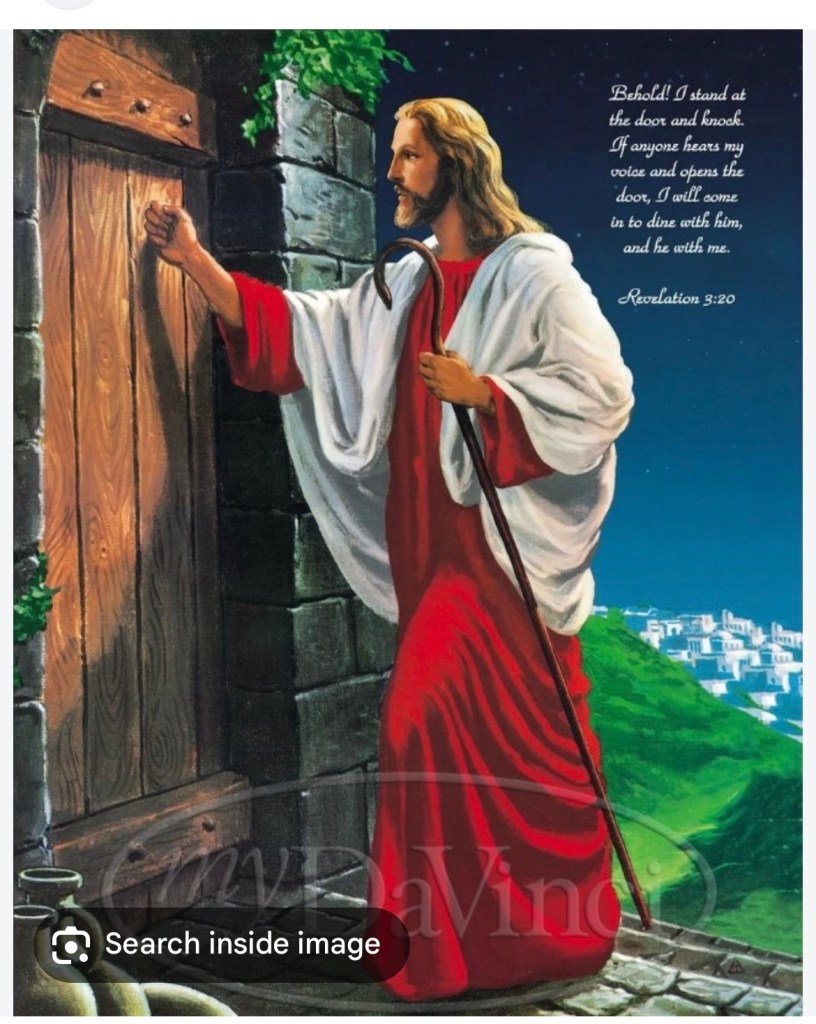
It’s not easy to be thankful for me. There are so many questions I have. So many doubts. What purpose could I actually serve? What good am I (one out of billions). What really is my worth? I am not setting the world on fire. No one hangs on my every word. I suffer pain and grief, misfortune and mistrust just like my neighbor. I’m the girl next door. There is nothing special about me. But you told me Lord, that I am special. That YOU made me in your image. (Genesis 1:2) That YOU knitted me together in my mother’s womb. (Psalm 139: 13) That YOU counted the hairs on my head. That I am more precious to YOU than the sparrow. (Luke 12:7)

By the world’s standards, I am nobody. But to you, oh Lord, I am fearfully and wonderfully made. (Psalm 139:14) I am your creation. You breathed life into me. (Genesis 2:7)

I thank you lord for me. For all the small things I get to do in your name.

Amen

*Bible verses are from the English Standard Version. 

An interview with Ted Wallenius, author of Strapped for Love

by Stephen Bent

Steve:

Hi Ted. I’ve got half a dozen immediate questions. We can dig down into each one for further stuff when you’ve considered them. Let’s start with origins and research. Strapped for Love feels grounded in real systems and objects, from Nevada’s brothel laws to the Vincent Black Lightning itself. Did the story begin with any of that real-world research, or did those details emerge as the narrative took shape?

Ted:

I started with two very loose ideas, a song and an incident at work. The song is a Todd Snider story song called 45 Miles, where he’s talking about driving between Lake Tahoe and Reno to do a show, and there’s snow on the road, and they have a car accident. My wife and I do that drive all the time, so I’m familiar with the location and the fear of driving in snowy conditions-I’ve hit the mountain a couple of times, if you know what I mean. In the song he says they’re all listening to Richard Thompson on this drive. Now I had no idea who Richard Thompson was but Todd’s turned me on to lots of good stuff before, so I went looking to see what I could find, and there was this great sort of folky outlaw fable with amazing guitar and it was about this really famous motorcycle and a girl called Red Molly and Box Hill, which I’m guessing you’re familiar with. So that was something I wanted to do something with about the time we started this project. The second thing was a fellow and a girl who came into the bar and the girl was just really mean to both me and him. She asked for a shot of expensive tequila and when I told her there wasn’t enough and I would have to get more she got angry with me. “Just give me what’s in there-I’m not paying for it-he is.” I wanted to know why someone would order something like that and not want all of it. It only dawned on me later that she didn’t give a rat’s ass about the tequila-she was there meeting the guy who’d hired her and they were just passing time before they went off to their hotel room. Those sorts of transactions happen sometimes here and they’re always fascinating. The dynamic stuck with me and I wanted to talk about it from the girl’s side.

I did do a little Wikipedia diving on both Nevada brothels and the Vincent Black Lightning, and from that I got to learn about Fairport Convention and Sandy Denny too. Did you know she did the background vocals on “The Battle of Evermore?”

Steve:

I did know that, Ted. The only female on any OG Led Zeppelin recording. Sandy is sorely missed. And that song is my sister in law’s favourite (Vincent Black Lightning, she doesn’t care for LZ). Fantastic answer and all more reason to love Todd Snider.

Next I want to dig into your writings historical and technical specificity. In this and your otherwork I’ve noticed you reference specific historical events and period technology. Is Strapped for Love part of that same impulse you felt in your novel Mansfield Ohio?

Ted:

Mansfield, Ohio I really wrote for my mother, who grew up in a terrible situation. My family’s roots were in the Ohio River Valley. My father’s family were dairy farmers and railroad engineers, two things that have largely disappeared in this world. Grandma on Mom’s side wasan architect, at that time a woman in a man’s world. I don’t have many memories of my visits to Ohio, so I did do some research. Timothy Brian McKee’s blog about Richland County was invaluable, and I offer him belated thanks here for the leads he gave me on Park Avenue West, the Hotel Lincoln, the Three Graces fountain, the heady days of Malabar, the Mansfield Tire and Rubber Company, and especially Mansfield’s underground restroom, which led me to William E. Jones’s Tearoom. The Westinghouse Ballroom I found on Facebook, along with many folks’ happy memories. I watched Mechanized Death at some point in high school, and that tied right in; at that point, it was almost like someone else was writing the story for me. I have a fascination with cameras, the balance of security and intrusion they give us. In the world where we exist those little girls might never have died, but on the flip side the invasion of Michael’s privacy killed him. Strapped for Love is much more based on my personal experiences and locations I can see from my front door, or near it.

I think markers readers can relate to are important in a story, to bring them in, to make them say “hey, I remember that” or “I get that.” I hope I got some of them right.

Steve:

Fantastic answer, Ted. I agree on markers in stories. They tell on the author and the reader in the same way. A great leveler. Like the references in songs you mentioned they can also provide a new perspective. Just like Todd and Vincent Black Lightning. I’m now seeing some things differently due to this marker insight in your own work. It’s a powerful tool and you wield it well. Music seems integral to your work even when you sideline the description of it slightly. Do you write to music?

Ted:

I use music as inspiration for all of my writing. I still buy all my music (no streaming) and I make playlist after playlist. There’s so many references in my writing that I probably can’t even find them all any more, and that goes back to being fourteen or so and wanting to use every song title on Def Leppard’s Pyromania album as a chapter title for the idea that eventually became (The Moon is Too Bright) to See Many Stars.

If you see something that tickles your music memory, know that I was probably thinking the same thing when I wrote it. It’s great for shared experience. It’s great for emotion. And anotherthing I like about music is the permanence of it. Steve, I know you’re a music guy, and that’s actually how I came across your blog. For those of you who aren’t aware, Steve is a wonderful resource for music, especially new stuff. I’ve gotten so many good recommendations from him. I wasn’t even searching WordPress when I found his work. I’d googled Mick Ronson guitar solos, and that sent me looking for the Wildhearts, and SteveForTheDeaf’s blog was the top hit.

Steve:

That is very kind of you, Ted.

Ted:

I have music playing almost constantly. All sorts of music, every genre that I’ve ever connected with. When I’m writing, if I’m in the right place, I don’t even hear it. For instance, we’re listening to “Sh-boom” by the Chords on constant replay in the house at this moment, because my wife is going to have to sing it in a play, which is going to be hilarious. And it’s not even driving me insane. Yet.

Steve:

Ensemble storytelling is a tricky thing to nail. This story works as an ensemble, with no single character claiming the narrative outright. What draws you to ensemble structures, and how do you decide where to place narrative weight when several characters are in play??

Ted:

I believe it’s the characters that drive a story, so when I need a story to go somewhere I tend to have a character that sends it along in that direction. Then I try to develop that character as much as I can, so that they’re not just a plot device or cardboard cutout. In Strapped for Love I had the very specific goal of starting with four characters who wanted something they couldn’t have. For

Stacy it’s love. For Tim it’s excitement. For Janey it’s that motorcycle and the freedom it represents. And then for Two-Cents it becomes lifelong companionship, something he realizes he can have if he gives up other parts of his life.

I also like to think that any of us could be any of those four characters with only a degree or two of separation from our actual lives.

Steve:

Let’s step into uncomfortable territory for a moment. I want to ask you a classic writers question now. About writing characters unlike yourself.Many of your characters make choices you clearly don’t endorse. How do you approach writing people who do things you’d never do yourself, without either excusing them or turning them into villains?

Ted:

With characters I try to see their side of things. I don’t tend to believe in either heroes or villains. I actually have a lot of trouble writing villains, because I don’t see the world as black and white and I find myself bypassing the temptation to judge choices or tell others what they should do. I think everyone and everything is influenced by the situation at hand and that creatures generally do what they have to do to in order to survive. For example, in my long fantasy tale (The Moon is Too Bright) To See Many Stars, I write from the perspective of both sides of the conflict. That could confuse readers who want answers to what is right and wrong in a world where those answers don’t exist. In my own life I often find that those answers come later; that my full understanding of a situation lags a long way behind what’s laid out right in front of me.

I suppose the character of Tai is the exception to that in this story; he doesn’t really have any redeeming qualities. He’s a bully and a user, and I don’t like those sorts of people in real life; I hope he’s not two-dimensional.

Steve:

let’s do the hero worship thing now and discuss who you’re reading, influence, and admiration.

Which published writers do you most enjoy reading right now, purely as a reader? And do you think it’s possible to admire other writers without their influence creeping into your own work?

Ted:

I’ve been writing a long time now, and I do believe I’ve developed my own voice, but strong writers influence my writing tremendously, to the point where I know I can’t read them and write at the same time without brutal self-examination and editing.

I always loved to read, but I hated being told what to read in high school, so I skipped a lot of it.

I am forever grateful to the college professors who taught me what was really good and fostered my love for world literature. To get listical, my favorite authors are Malcolm Lowry, Garcia

Marquez, Faulkner, Hemingway, Melville, Woolf, Achebe, Nabokov, Pynchon, Flann O’Brien, Rushdie, and oh my goodness I could go on forever. I just ordered Franny and Zooey for the front line library and I’ll tell you straight up that your recommendation of Under Milk Wood is going in there too. What poetry resided in Dylan Thomas. Thank you for that.

For short stories my two favorites are “The Dead” by Joyce and “Good Old Neon” by DavidFoster Wallace.

And I do believe those authors are all there, Up Above My Head, showing me what to do. Well, all of them except Rushdie, who is still with us in spite of the religious hatred directed at him.

He’s there in my bookcase when I need him.

Steve:

Your work circles permanence a lot, whether it’s music, place, or memory. Which makes me wonder about platform. So let’s talk about the medium that brought us all together in the shindig.

You choose to publish your work on WordPress rather than through more traditional literary venues or platforms. What does that choice give you as a writer, creatively or practically?

Ted:

When I was in eighth grade I remember telling a teacher that “anything that gets published has to be good, right?” They just laughed.

I queried Chivalry and (The Moon is Too Bright) hundreds of times with agents and publishers.

I’ve had agents get mad at me for badgering them. I went to this writing conference and when we were talking about query letters I asked why none of mine got a response. The agent replied,

“Well, your query letter’s not any good.”

I thought about that for a long time. Mainly because I pretty much copied that query letter from the one Brandon Sanderson used to get a publishing contract with a prominent agent who I won’t name. His was printed in Writer’s Market.

And then I came across this quote from Toni Morrison, who I believe worked for Viking at the time. She said, “Even in the late nineteen-seventies, acquiring authors who were certain sellers outranked editing manuscripts or supporting emerging or aging authors through their careers.”

That blew it wide open for me. Agents weren’t there to read my stuff, or help me get published, or to guide my writing. They were there for one thing and one thing only: to make money. So if my name was Trump, I could write any crap I wanted and get it published tomorrow. But without name recognition, no one at Knopf was truly going to read my work. And I’m not going to do the things that are required to get name recognition. I’m not going to play that game. It’s not my style, or even within my abilities. What I’m interested in is reading and writing. So I said fuck it and just started putting my novels up on WordPress for free. And guess what? People did read them. And people did like them. And that made me feel so good. And they’re not going anywhere. WordPress doesn’t delete old posts, and with the way AI is harvesting our words now who knows when one of us might write something that lasts forever? So I’m going to keep doing it, and I’m going to keep encouraging others to do it, because it’s real. I’m only half joking when

I say I think I’m WordPress’s biggest proponent.Fantastic answers, Ted. I’ll format them and send it to you for checking over.

Steve:

Ted:

Thank you Steve!

Strapped for love

Art work by Stephen Bent

Part 3

By: Ted Wallenius

Everyone left the Corner Bar. Janey left with her escort. Two-Cents and Stacy rode in Two-Cents’s black GMC, and Tim went with them, in the back seat. The peed-on man went home to take a shower. The bartender wiped down the counter and went home to his TV dinner.

After Stacy stepped inside without saying a word, Tim and Two-Cents sat together in Two-Cents’ driveway. Tim asked Two-Cents if he could buy a half gram of the Bolivian marching powder.

Two-Cents gave Tim the cocaine and Tim went back across the street to his own house, changed into a dark shirt and black jeans, and waited in front of his living room window.

After midnight Tim saw the black truck start up in his neighbor’s driveway. It was a cold, windy night and he knew Two-Cents liked to warm up the GMC before leaving. Tim did a quick snort, spooning it in with the baby spoon he’d never had any use for. Then, feeling fine, he walked across the street. He opened the rear side door of the GMC and lay down across the back seat. A few minutes later Two-Cents came out and got into the driver’s seat. He drove straight to the Broken Pony without ever realizing Tim was in the truck with him.

When Two-Cents stopped the truck and got out Tim lay still and flat for a few more minutes. He maneuvered the plastic bag and the baby spoon out of his pocket and did another snort. Then he opened the back door, stepped carefully out onto the gravel lot, and looked around to get his bearings. He could see the main building with the rearing stallion on the face of it and the illuminated signage for the brothel. Behind the main building there were three sheds. Janey told him the one he needed was the one in the middle.

The middle shed had a good, sturdy ramp and a keypad lock. Tim walked carefully up the ramp and pressed the numbers Janey had given him into the lock. He heard the latch release with a click. Now he’d have to be fast. She told him there were cameras, and he’d have to turn on the lights to see what he was doing. He opened the door and stepped into the shed.

The light switch was beside the door. Tim Whiting clicked it on, fearless. He knew he could do it. People stole motorcycles all the time. The storage shed flooded with light. Tim’s eyes widened and blood roared through his heart. There it was. He couldn’t believe it.

Janey wasn’t lying. It was an honest-to-God Vincent Black Lightning, right there in front of him.

It was up on an orange rear wheel stand, perpendicular to the raised platform, bathed in the lights like an angel’s chariot. The lights gleamed off the chrome in aerials and disappeared into its black sides.

Tim climbed on, feeling the frame and the leather beneath him. He scooped the last bit of white powder straight from the baggie into his nose and dropped his pewter baby spoon on the floor with a clatter. The keys were in the ignition. He thought that old kick starter would be a bitch to fire so he reared up off the saddle for it, but when he kicked it down with his boot, the engine, filled with a mix of high-octane gasoline and synthetic motor oil, turned over like a kitten purring.Tim pushed the bike off the stand, put it in gear, and let go the clutch. The Vincent jumped off the platform. He gave it a little gas to get the rear wheel spinning and turned it like a jungle cat in the small space, facing it out the door and down the ramp. Tim smiled so wide he felt like his face was going to split open. He saw them now, people running out of the Broken Pony, gathering open-mouthed in the gravel court. Tim Whiting gassed the Vincent and roared down the steps. He went right through them, watching them dive out of his way like tenpins.

With a swooping turn Tim was off the gravel and out on the highway, wind whipping through his hair. The feeling of exultation that poured through him seemed to come from deep inside the motorcycle, roaring up through his thighs to his chest and out his open mouth as he yelled out his triumph.

“I feel free,” Tim Whiting thought.

Behind him Tai Botman spread his legs on the blacktop, took aim with the Colt Python he’d grabbed up in his office when he saw the intruder in his shed on his security camera, and squeezed off a shot that rocked Tai backwards on his heels and set the night on fire.

Tai Botman slid down the berm from the highway and dusted off his hands. “Why’re you looking at me like that?” he demanded of the assembled persons standing in the gravel courtyard of the

Broken Pony. Since it was Friday night, there were two bouncers, both useless. There was a maid, a bartender, also useless, four johns, and six working girls who weren’t working. Tai wanted to shoot each and every one of them. His motorcycle had just disappeared down US 50, heading in the direction of Utah.

Tai said, “I didn’t hit him.” There was nothing out there. No cops, no emergency rooms, hardly even a gas station until Ely. No one who could catch a ‘52 Vincent Black Lightning.

Janey was in the doorway. She knew Tai had hit him. She’d heard Tim start the Vincent, put a robe on and made it to the door just in time to see the almost imperceptible wobble with the blast from the Colt as the taillights of the Vincent Black Lightning tore away into the darkness. Tai wouldn’t have seen it, not while he was trying to wrangle that elephant gun.

“You,” Tai said to her. “You did this.”

Now Two-Cents was in the doorway behind Janey, naked but for a purple towel wrapped around his midriff, his pimples red in the courtyard halogens.

“And you,” Tai menaced. He raised the Colt Python, six inches of stainless steel barrel, five more .357 magnum semiwadcutters ready to go in the wheel. He pointed the muzzle at Two-Cents’ face. Two-Cents raised his hands, knowing he was about to die.“Cut it out, Tai. That’s brandishing,” Janey told him.

“I don’t give a shit, Janey,” Tai said. “It’s not even a felony. You stole my motorcycle.”

“It’s my motorcycle,” Janey said, “and I didn’t have anything to do with this.”

“Bullshit,” Tai said, but he lowered the pistol, which was a good thing for everyone, because the cavalry pulled into the courtyard with their red and blue lights flashing.

While Tai talked to the two officers, who knew quite well who he was and how much money he paid them to keep his business operational, all on the up and up of course, Janey went back inside, ignoring Two-Cents in his towel even when he reached out to see if she was okay.

Janey worked the dial on the wall safe in Tai’s office. The easiest way to crack a safe is to watch someone else dial the combination. She got it right on the first try. She removed the title for the

Vincent Black Lightning and tucked it into her purse.

• • •

In the darkest part of the morning Two-Cents pulled his black truck into the driveway, crept into his house, went to the bathroom to wash his hands, and crept into bed beside his wife, Stacy. She didn’t wake, only mumbled a little at the shifting of the blankets and the mattress. Two-Cents pulled the covers up to his chin. It was cold in the house but under the blankets he felt the safety and security of his own bed and his own wife in a way he hadn’t before Tai Botman pointed that pistol right at his face.

He lay still, listening to Stacy sleep. When she coughed he turned towards her. Making sure his hands were warm enough, he put one on her stomach. After a moment he felt her hand come to rest on top of his, and then he rolled to her side and put both his arms around her.

Two-Cents had never had a gun pointed at him before. He was just a coke dealer. When people saw him they smiled. Still, he knew what business he was in, and he knew death was always a possibility. He thought about that movie Scarface, the Brian De Palma one, where Hector the

Toad handcuffs Tony’s associate Angel to the shower plumbing and then dismembers him with the chainsaw. Two-Cents thought how they don’t show the murder in the movie but watching it you still know what’s going on and how awful it is. Once he started thinking about it Two-Cents couldn’t go to sleep.

“Hello,” Stacy said into his shoulder. “Where’ve you been?”

“Nowhere,” Two-Cents answered. Stacy muttered a little bit, but she didn’t say anything out loud. She started to fall asleep again, held fast between his arms.“You know, Stacy,” Two-Cents said, “Maybe I don’t want to do the drug dealer thing anymore.”

“That’s okay,” she mumbled. “I think that would be a good idea, to quit doing that. What else would you do?”

“I don’t know,” Two-Cents said. He had transportation. He was an American citizen. He had a high school diploma. There were no convictions on his record. He didn’t mind washing dishes. It was kind of soothing, all that hot water and steam, the idea of reusing something, of making it new and useful again instead of just consuming it, up the nose, in it came in its bundles for the scale and out it went in tiny vials.

“Maybe get a straight job,” Two-Cents said. “Maybe just work and stay home for a while. We could make it, couldn’t we?”

“Yeah?” Stacy said. “Stay home? With me?”

“Yeah, maybe,” Two-Cents said.

He thought about what that meant, to have another person to listen to him groan when he put his socks on, another person to share a laugh with him when that cat fell out of the tree on TV, another person to cook spaghetti and put a ladle of the sauce into it and stir it all up to get it coated and tear up the lettuce nice and small. To go to bed and know that another person was going to be there too, nearby, undemanding in sleep. A companion.

Now Stacy shifted in the bed. She put her arms around him too and held him tight, there in the safe darkness under the covers. “I think I’d like that,” Stacy hummed. “I could switch into the bakery,” she hummed. “They’re looking for a full-time manager. It’s union. Better pay, and health insurance for both of us.”

“You know how to do that?” Two-Cents teased her. “Make all those curlicues and roses?”

“Yeah,” Stacy said. “I know how to do that.”

After a while, Two-Cents said, “Me too.”

“You know how to make flowers out of frosting?” Stacy teased.

“No,” Two-Cents said. “I mean I think I’d like it too.”

“There’s other things I can do for you, you know,” Stacy told him. “I’m good at it.”

“I know,” Two-Cents said. “It just . . . I just . . .”“It’s okay,” Stacy told him, and that’s how they fell asleep, warm, safe, and together.

The End